


 English
 中文简体
中文简体
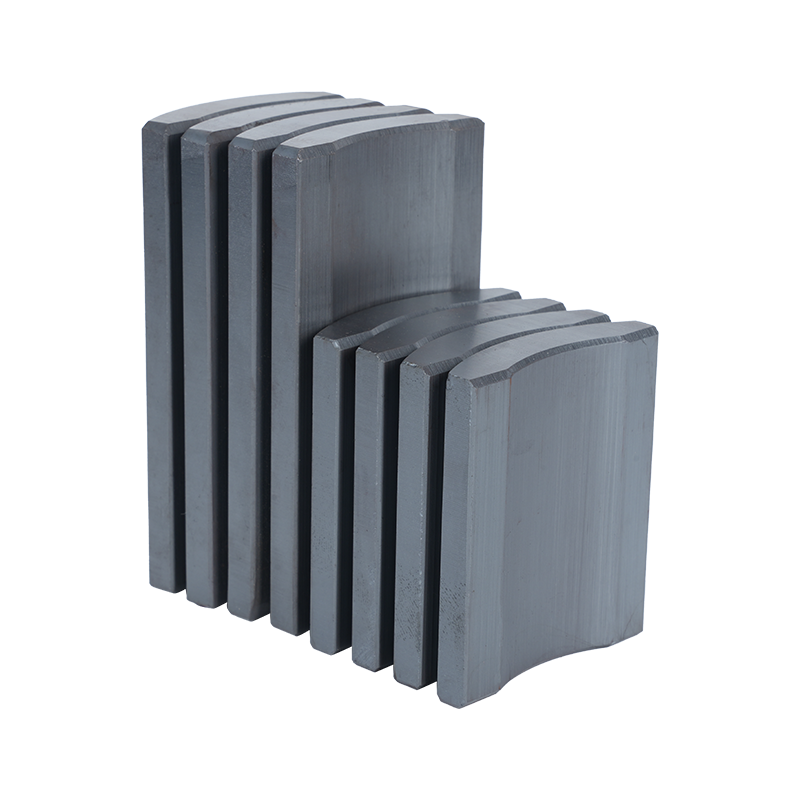
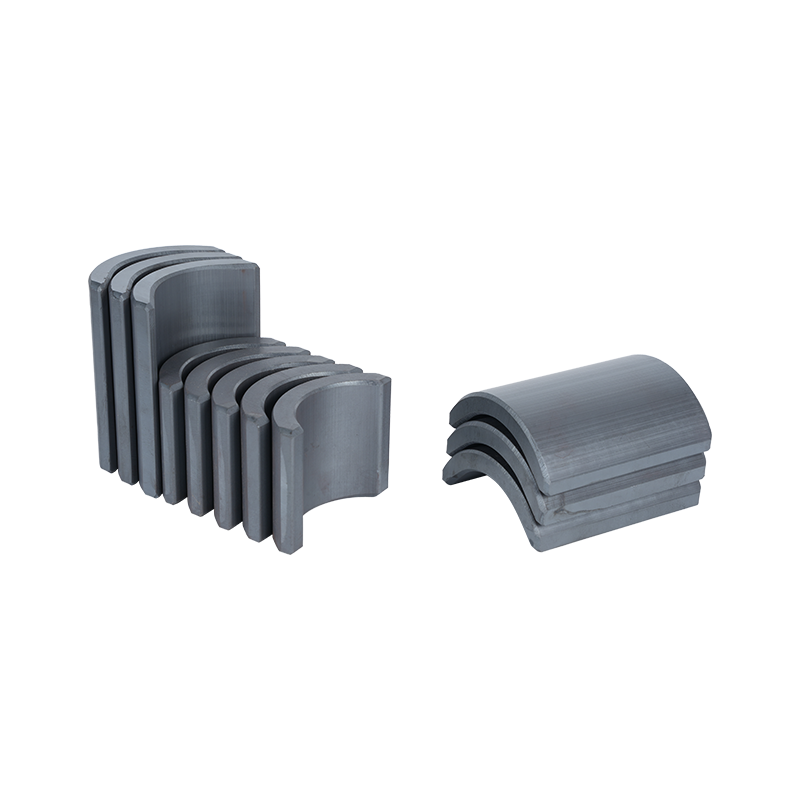
Dong Yang TianQi Magnetic Segment Co.,Ltd.(formerly Shuangyang Magnet Tile) is a professional enterprise specializing in the production of motor magnet tiles
Search by posts
Categories
Popular products
Contact Us
Industry News
 By Admin
What Is Ferrite Arc Magnet And How Is It Used in Motors
What Is a Ferrite Arc Magnet and How Is It Made
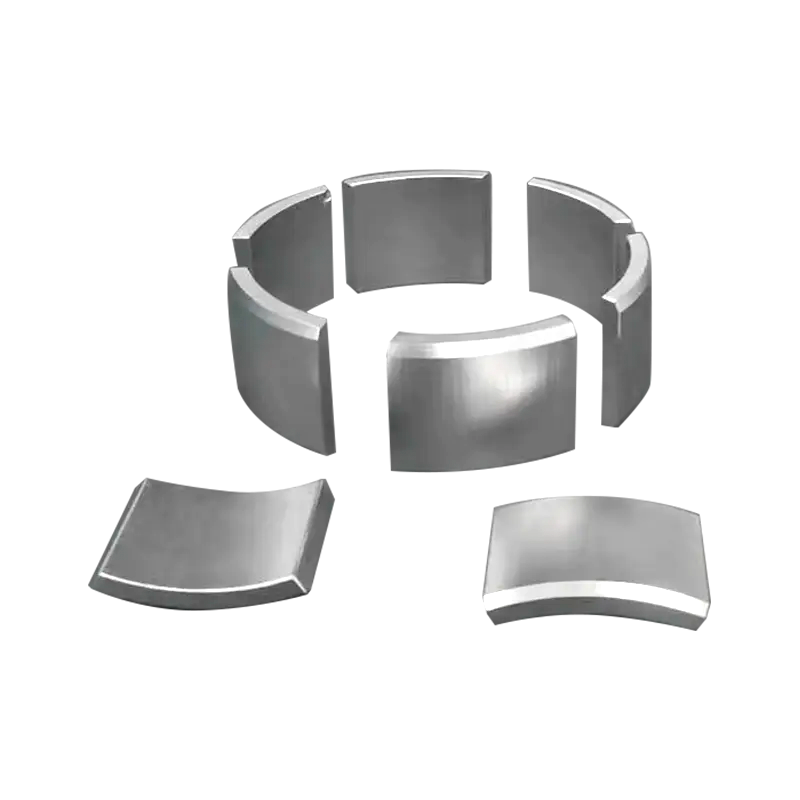
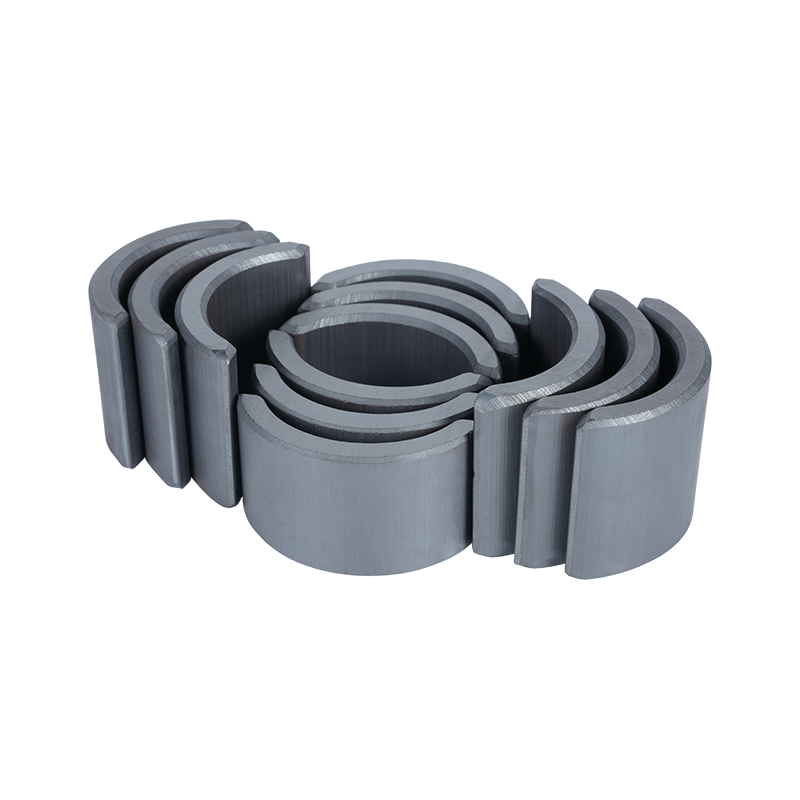
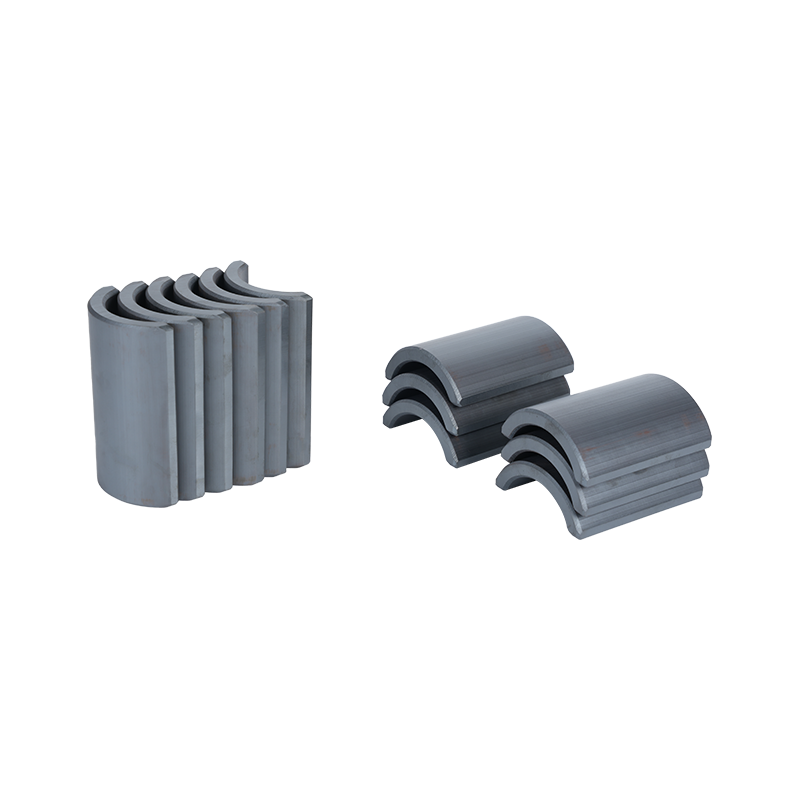
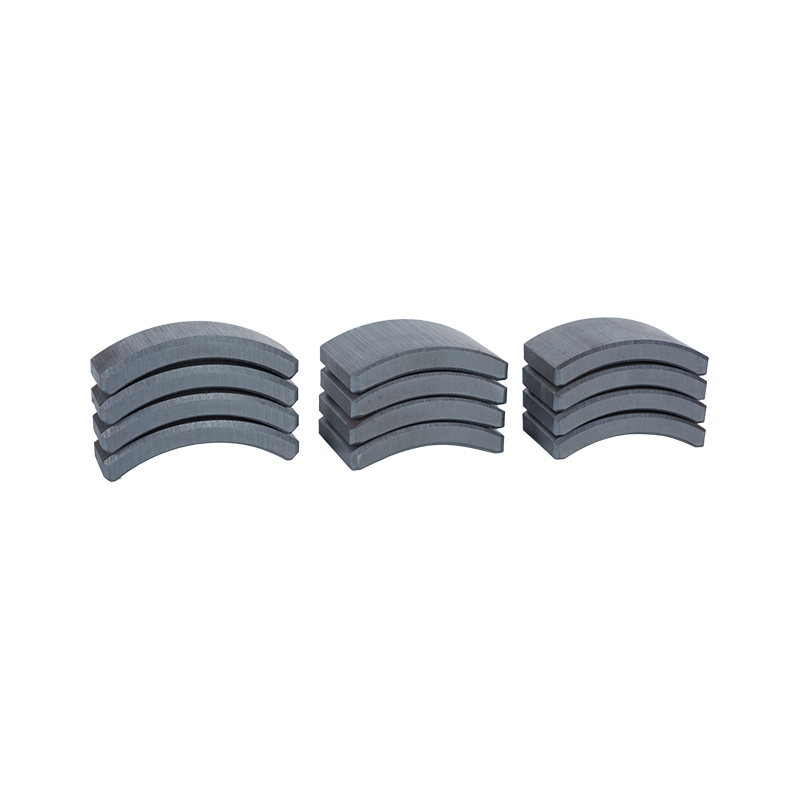
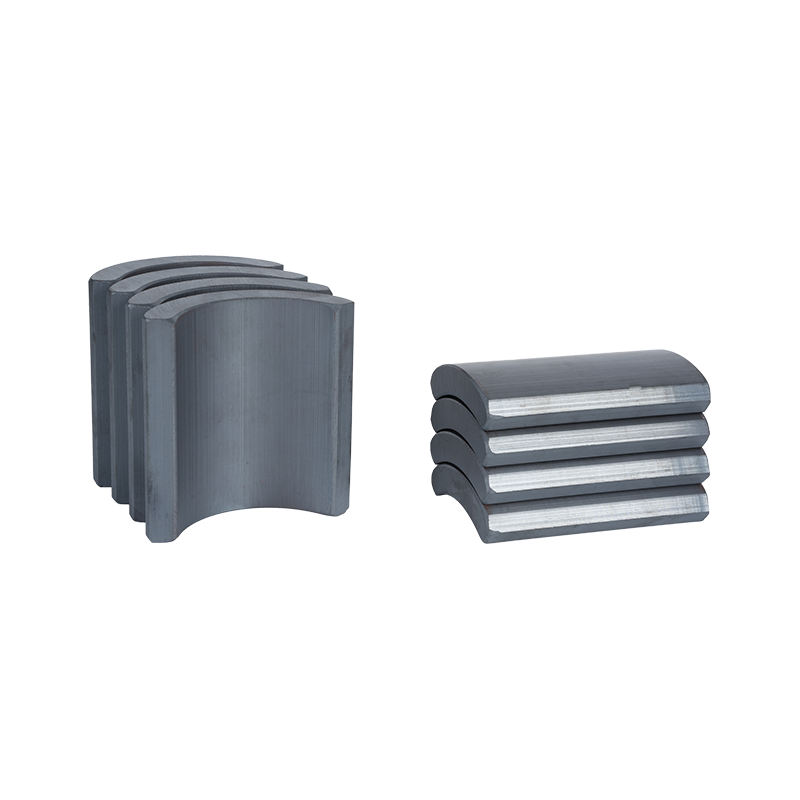
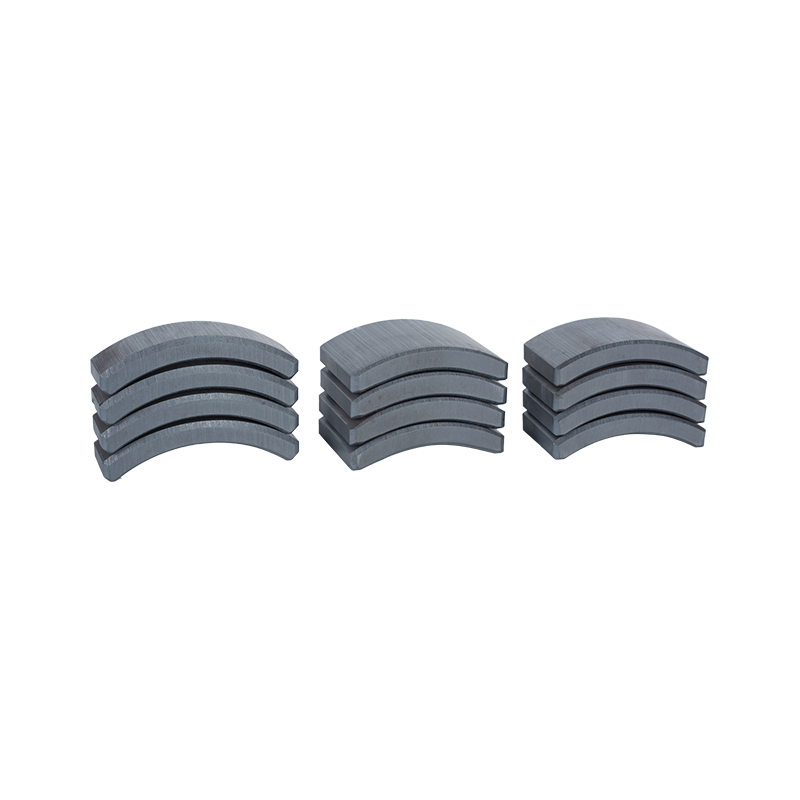
Ferrite Arc Magnet is a curved permanent magnet segment used inside many rotating machines. The shape looks like a slice taken from a ring. It is not random shaping. The curve matches the inside wall of motor housings where round movement happens all the time.
Material comes from iron oxide mixed with barium or strontium compounds. After mixing, the powder is pressed into a curved mold. The pressure step gives it the arc form that later fits inside motors without extra cutting. A heating stage follows. Inside that stage, particles lock into a fixed magnetic structure. After cooling, the piece becomes hard and stable in shape.
In daily production, the final shape matters more than later adjustment. Once formed, the material does not respond well to mechanical trimming. That is why early molding accuracy is important. A small deviation can affect how it sits inside a rotor ring.
Inside motor assembly, several arc pieces are placed side by side to form a full circle. The connection between segments decides how smooth the rotation feels during use. A Ferrite Magnet Supplier usually focuses on keeping each segment consistent so the motor does not show uneven force during spinning.
What Are the Key Properties of Ferrite Arc Magnets
Ferrite Arc Magnets behave differently from flexible magnetic materials. The structure is rigid, almost ceramic-like, which gives it a firm shape even under long operation. In motors, that stability matters more than appearance.
Magnetic force does not jump around during use. Once installed, the field tends to stay steady while the motor rotates. That steady behavior is what keeps small appliances running without irregular shaking.
Some common characteristics can be seen in real use:
- Magnetic field stays steady during continuous rotation
- Surface does not rust easily in humid environments
- Hard structure keeps shape under pressure inside housing
- Heat inside motor does not easily disturb magnetic alignment
A washing machine motor or air cooler fan motor usually runs in warm and slightly humid surroundings. Ferrite Arc Magnets can sit inside without changing form or losing structure quickly.
One thing worth noting is brittleness. A drop during assembly can cause small cracks. Even a thin crack may affect how magnetic lines pass through the segment. For this reason, workers often avoid force during installation and rely more on guided placement.
How Does the Shape of Ferrite Arc Magnets Influence Their Performance
The curved shape is not only for fitting. It directly affects how the motor moves.
Inside a motor, the rotor turns inside a circular space. Straight magnets would leave gaps along the curve, which creates uneven force. Arc segments close that gap naturally. When several pieces are arranged together, they form something close to a full magnetic ring.
That ring shape helps magnetic force spread more evenly. The rotor receives force in a smoother path instead of uneven bursts. In everyday terms, the motion feels less shaky.
Magnet direction is arranged across thickness. One side becomes north, the opposite becomes south. When paired inside the motor, attraction and repulsion repeat during rotation. That repeated change is what keeps motion going.
Even spacing between segments matters more than it looks. A slightly uneven gap can cause the rotor to pull harder on one side. In small devices like handheld tools, that difference may show up as vibration or extra noise during use.
| Shape Type | Fitting Inside Motor | Field Distribution | Typical Movement Behavior |
|---|---|---|---|
| Arc segment | Matches cylindrical wall closely | Even circular spread | Smoother rotation feel |
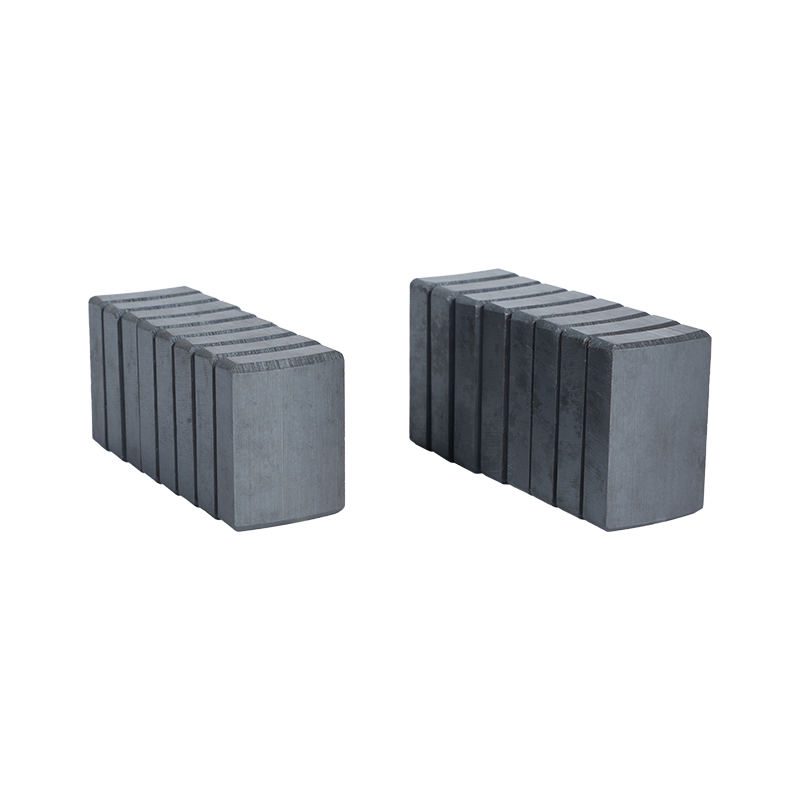
| Block shape | Leaves gaps in curved housing | Less uniform in circle | More uneven movement |
| Mixed assembly | Depends on placement quality | Varies by design | May need correction during use |
The arc shape reduces wasted space inside motor casing, which is one reason it appears often in compact designs.
Why Are Ferrite Arc Magnets Used in Motor Rotors and Stators
Inside a motor, there are two main working parts. One moves, one stays still. Ferrite Arc Magnets can be placed in either position depending on design choice.
When placed in the rotating part, magnets move with the shaft. The stationary coils create a changing field that pushes and pulls the rotor. When placed in the fixed part, the magnetic field stays still and guides the moving coil section.
In both cases, the curved form helps the field stay close to the circular path of motion. That reduces empty space where magnetic force would otherwise weaken.
In everyday devices, this design appears in different forms:
- Electric fans rely on steady rotation with low vibration
- Washing machines depend on controlled spinning inside sealed housing
- Vehicle seat adjustment motors use small arc segments for precise movement
- Cooling systems use compact motors that run for long periods without interruption
Arc segments sit tightly against the inner wall of the motor casing. That contact reduces gaps where magnetic field could weaken. As a result, rotation feels more stable during long use.
Maintenance is also easier in some designs. A damaged segment can be replaced without rebuilding the whole structure. That reduces downtime in small motor systems used in tools or appliances.
How Do Ferrite Arc Magnets Affect Motor Efficiency and Reliability
Inside a running motor, energy moves through magnetic interaction. Ferrite Arc Magnets help keep that interaction steady. When the field remains even, the rotor does not experience sudden changes in force.
Heat builds up naturally during rotation. Ferrite material keeps its structure under that condition. The magnetic alignment does not easily collapse, so motion continues in a predictable way even during long operation.
Humidity and dust are common in real environments. Kitchens, garages, or outdoor equipment often expose motors to moisture in air. Ferrite Arc Magnets do not react strongly with these conditions, so surface change is limited over time.
Another visible effect is vibration control. When magnetic force is balanced, the rotor does not pull unevenly. That reduces shaking in devices like handheld grinders or small fans. Lower vibration also protects bearings inside the motor housing.
A few practical points often appear during use:
- Stable rotation during long running periods
- Less noise compared with uneven magnetic alignment
- Reduced mechanical stress on internal parts
- Steady movement in small DC motors used in portable tools
Handling still plays a role in performance. A cracked segment may not break the motor immediately, yet it can disturb field balance. For that reason, storage and installation are usually done with light contact and controlled placement. A Ferrite Magnet Supplier typically pays attention to packaging and shape protection during transport to reduce damage risk before assembly.
Where Are Ferrite Arc Magnets Used in Everyday Motor Systems
Ferrite Arc Magnets appear in many devices that people use without noticing what is inside. The motor structure may look simple from outside, yet inside it depends on curved magnetic segments working in a fixed circular path.
In home appliances, small motors often rely on these arc-shaped pieces to keep movement stable. A washing machine drum, for example, needs steady rotation during both slow mixing and faster spinning. Inside the motor, arc magnets help maintain a balanced pull so the drum does not move unevenly.
Air conditioning units also use compact motors for airflow control. The fan system inside depends on continuous rotation over long periods. Arc magnets support that by keeping magnetic force evenly distributed around the rotor ring.
In handheld tools, space inside the motor is limited. Drills and saws use small cylindrical motors where every millimeter matters. Arc segments fit closely against the inner wall, allowing rotation without wasted space.
Automotive systems also rely on similar motor structures. Window lifting, seat adjustment, and small cooling fans all use compact motors where arc magnets provide stable movement in tight housing.
Common use areas include:
- Household washing and drying equipment
- Air circulation and cooling systems
- Portable electric tools
- Automotive movement control units
- Small mechanical drives in appliances
Each application has different working conditions, yet the internal magnetic role remains similar.
What Design Factors Matter When Using Ferrite Arc Magnets in Motors
Motor design depends heavily on how arc segments are placed inside the housing. A small change in position can influence how the rotor behaves during motion.
The factor is alignment. Arc pieces must follow the inner curve of the motor shell closely. When alignment is uneven, the air gap between magnet and rotor changes, which affects force distribution.
Thickness of each segment also plays a role. Thicker segments produce stronger field concentration, while thinner ones allow more space inside compact motors. Designers often balance space and force depending on the device size.
Magnet direction is another important point. Each segment is oriented so that opposite poles face across the rotor path. When arranged in sequence, the magnetic field forms a continuous cycle that supports rotation.
Assembly method is also practical. In many cases, segments are placed one by one inside a circular frame. During this process, light mechanical force is used instead of pressure tools, since the ceramic structure does not respond well to sudden impact.
| Design Element | Practical Role in Motor | Effect on Movement |
|---|---|---|
| Arc alignment | Fits inner housing wall | Reduces uneven rotation |
| Segment spacing | Controls field balance | Affects smoothness |
| Thickness choice | Adjusts magnetic force | Influences torque feel |
| Pole direction | Defines rotation cycle | Enables continuous motion |
Ferrite Magnet Supplier involvement becomes important at this stage, since consistent geometry helps reduce correction work during assembly.
How Do Manufacturers Handle Ferrite Arc Magnets During Production and Supply
Ferrite Arc Magnets require careful handling from forming to final installation. Once shaped, the material does not tolerate strong impact.
After production, segments are usually grouped based on size and magnetic response. Matching pieces together helps ensure that motor assembly behaves evenly when rotation starts.
Transport conditions also matter. Sudden vibration during movement can affect edge stability. For that reason, packaging is arranged to limit internal movement rather than compressing the material tightly.
In practical use inside factories:
- Segments are checked for edge smoothness
- Magnetic direction is verified before assembly
- Parts are grouped for consistent motor fitting
- Storage areas avoid direct impact surfaces
Ferrite Magnet Supplier plays a supporting role in keeping these steps consistent so that final motor assembly does not require frequent adjustment.
What Changes Are Appearing in Motor Use of Ferrite Arc Magnets
Motor design keeps shifting toward smaller size and smoother operation. Ferrite Arc Magnets still remain part of many structures because their shape fits naturally inside circular systems.
One noticeable change is the move toward tighter motor housing. Devices are becoming more compact, which places pressure on internal component arrangement. Arc segments support this trend because they occupy curved space efficiently.
Another change appears in long-duration operation devices. Systems such as ventilation or continuous pumping rely on motors that run for extended periods. Ferrite Arc Magnets hold stable behavior under repeated heating and cooling cycles, which makes them suitable for such conditions.
Designers also focus more on reducing vibration. As devices become quieter in daily environments, internal balance becomes more important. Uniform magnetic distribution from arc segments helps maintain that balance without adding extra mechanical parts.
In small electronics, motors are shrinking while still expected to maintain steady movement. Arc segments help maintain field strength inside limited space, which supports this direction.
How Should Ferrite Arc Magnets Be Handled in Practical Use
Even though Ferrite Arc Magnets are stable during operation, they require careful handling before installation. The ceramic structure does not bend or absorb impact, so physical pressure can cause damage easily.
During assembly, direct collision between segments is usually avoided. Placement is done slowly, often with guiding tools that help align each piece inside the circular frame.
Storage conditions also matter in daily workshop environments. Hard surfaces and sharp contact points increase the chance of edge chipping. Flat, separated storage helps maintain shape before use.
In motor maintenance, replacement of a single segment is sometimes enough to restore balance. However, replacement pieces need to match position carefully, since uneven field distribution may affect rotation.
A few practical handling points:
- Keep segments separated during storage
- Avoid dropping or sudden impact during assembly
- Align slowly inside curved motor housing
- Check position before final fixing
- Replace damaged pieces with matching orientation
Ferrite Magnet Supplier support is often used during this stage to ensure replacement parts fit existing motor structures without adjustment issues.
Recommended products
-
Professional Customized Ferrite Motor Magnetic Tiles
-
Hard Segment Arc Ferrite Magnetic Tiles
-
Anti-Corrosion Ferrite Arc Magnetic Tiles
-
Strong Magnetic Permanent Ferrite Magnetic Tiles
-
Heavy Duty Sintered Ferrite Magnetic Tiles
-
Industrial Magnetic Tiles
-
Electric Motor Magnet Tiles
-
Curved Neodymium Magnet
-
Block Neodymium Magnet
Contact Us

Ever since its establishment, TIANQI has never stopped walking in pursuit of quality.
About Us
Products Links
Contact Information
-

NO.55, Jici Road, Hengdian Town, Dongyang City, Zhejiang Province, China
-

Tel: +86 13625895265
-

E-mail:[email protected]
Copyright © Dong Yang TianQi Magnetic Segment Co.,Ltd.
Magnetic Tiles Factory
